 ResearcherCollab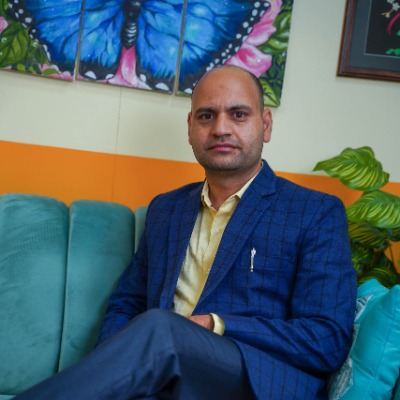
About
Rebat, a South Asian Research Hub on Inclusive Education (SARHIE) member, is an Assistant Professor of Educational Leadership at the School of Education, Kathmandu University. He also serves as the UNESCO Co-Chair in Teacher Education in Nepal. Currently, he also leads the Research and Innovation Center at Kathmandu University, Nepal. With over 15 years of experience in academic leadership and collaborative research, he has led and contributed to several international initiatives, including Erasmus+ and Transnational Education (TNE) projects. His work spans partnerships with governments, universities, and development organizations, focusing on advancing educational policy and practice in the Global South.
Research keywords
Publications
50Data collection methods in qualitative research: researchers' reflections
This article explores qualitative data collection methods based on researchers' experiences, integrating established techniques with culturally situated innovations. It explores core methods—interviews, observations, focus group discussions, and self-reflection—featuring their applications, strengths, and challenges in capturing nuanced human experiences. Moving beyond conventional frameworks, the article introduces and elaborates on innovative, context-sensitive data collection approaches such as Kurakani (informal conversational inquiry), Pandheri Guff (contemplative dialogue among women), and Chautari Guff (public participatory dialogue). Grounded in the authors' critical reflections from their own research journeys, the discussion offers practical insights for both novice and experienced researchers. It advocates methodological creativity and epistemic diversity, arguing that thoughtful adaptation and the generation of methods aligned with local contexts enhance rigor, authenticity, and the ethical co-construction of knowledge in qualitative research.
A Constructivist Case Study Methodology for Researching Leadership Practices in Under-Resourced Low-Fee Private Schools in Nepal
Studies on educational leadership have historically relied on models from well-funded environments. However, these models do not adequately represent leadership practices in schools with significant resource challenges. This deficiency is particularly noticeable in low-fee private schools in developing nations, which operate with limited funds, inadequate facilities, staff turnover, and high community demands. Understanding leadership in these environments requires a methodological approach that treats it as a socially constructed and contextually embedded process. This paper responds to the need for approaches that move beyond “one-size-fits-all” assumptions in leadership studies. It argues that exploring leadership in under-resourced schools requires depth, contextual sensitivity, and interpretive engagement with lived realities. Case study methodology is particularly well suited for this purpose, as it addresses “how” and “why” questions and allows for an in-depth exploration of contemporary phenomena within their real-life contexts, especially where boundaries between the phenomenon and its setting are not clearly distinguishable. Through a case study approach, leadership can be examined as it is practiced, negotiated, and reshaped within everyday school life. This enables a holistic understanding of how leadership interacts with structural constraints rather than being separated from them. The study adopts a constructivist qualitative case study design, drawing primarily on Merriam’s methodological framework while engaging critically with Yin and Stake. While Yin emphasises structured design logic and Stake foregrounds interpretive depth, Merriam provides a constructivist orientation that aligns closely with the aims of this research.
Data collection methods in qualitative research: researchers' reflections
This article explores qualitative data collection methods based on researchers' experiences, integrating established techniques with culturally situated innovations. It explores core methods—interviews, observations, focus group discussions, and self-reflection—featuring their applications, strengths, and challenges in capturing nuanced human experiences. Moving beyond conventional frameworks, the article introduces and elaborates on innovative, context-sensitive data collection approaches such as Kurakani (informal conversational inquiry), Pandheri Guff (contemplative dialogue among women), and Chautari Guff (public participatory dialogue). Grounded in the authors' critical reflections from their own research journeys, the discussion offers practical insights for both novice and experienced researchers. It advocates methodological creativity and epistemic diversity, arguing that thoughtful adaptation and the generation of methods aligned with local contexts enhance rigor, authenticity, and the ethical co-construction of knowledge in qualitative research.
A Constructivist Case Study Methodology for Researching Leadership Practices in Under-Resourced Low-Fee Private Schools in Nepal
Studies on educational leadership have historically relied on models from well-funded environments. However, these models do not adequately represent leadership practices in schools with significant resource challenges. This deficiency is particularly noticeable in low-fee private schools in developing nations, which operate with limited funds, inadequate facilities, staff turnover, and high community demands. Understanding leadership in these environments requires a methodological approach that treats it as a socially constructed and contextually embedded process. This paper responds to the need for approaches that move beyond “one-size-fits-all” assumptions in leadership studies. It argues that exploring leadership in under-resourced schools requires depth, contextual sensitivity, and interpretive engagement with lived realities. Case study methodology is particularly well suited for this purpose, as it addresses “how” and “why” questions and allows for an in-depth exploration of contemporary phenomena within their real-life contexts, especially where boundaries between the phenomenon and its setting are not clearly distinguishable. Through a case study approach, leadership can be examined as it is practiced, negotiated, and reshaped within everyday school life. This enables a holistic understanding of how leadership interacts with structural constraints rather than being separated from them. The study adopts a constructivist qualitative case study design, drawing primarily on Merriam’s methodological framework while engaging critically with Yin and Stake. While Yin emphasises structured design logic and Stake foregrounds interpretive depth, Merriam provides a constructivist orientation that aligns closely with the aims of this research.
From Standardized Tests to Meaningful Experiences: The Future of Student Assessment
This paper critically examines the prevailing dominance of standardized testing in student assessment and explores the global shift toward more meaningful, experience-based evaluation methods. Using a desk-review methodology, the study analyzes assessment practices from a diverse sample of countries including Finland, Estonia, Canada, Australia, New Zealand, Scotland, Sweden, Singapore, India, South Korea, and Japan, that have successfully integrated alternative approaches such as project-based learning, portfolios, and experiential assessments. These methods are shown to enhance student engagement, promote equity, and better prepare learners for real-world challenges by capturing a broader range of skills beyond rote memorization. The paper also discusses the challenges Nepal faces in implementing such alternatives, including resource constraints, teacher capacity, and cultural resistance, while highlighting opportunities presented by ongoing national education reforms. Practical recommendations are offered to support educators and policymakers in redefining educational success through inclusive, formative, and contextually relevant assessment systems. By embracing these innovations, Nepal can foster a more equitable and future-ready education system that values meaningful learning experiences over standardized scores.
From Standardized Tests to Meaningful Experiences: The Future of Student Assessment
This paper critically examines the prevailing dominance of standardized testing in student assessment and explores the global shift toward more meaningful, experience-based evaluation methods. Using a desk-review methodology, the study analyzes assessment practices from a diverse sample of countries including Finland, Estonia, Canada, Australia, New Zealand, Scotland, Sweden, Singapore, India, South Korea, and Japan, that have successfully integrated alternative approaches such as project-based learning, portfolios, and experiential assessments. These methods are shown to enhance student engagement, promote equity, and better prepare learners for real-world challenges by capturing a broader range of skills beyond rote memorization. The paper also discusses the challenges Nepal faces in implementing such alternatives, including resource constraints, teacher capacity, and cultural resistance, while highlighting opportunities presented by ongoing national education reforms. Practical recommendations are offered to support educators and policymakers in redefining educational success through inclusive, formative, and contextually relevant assessment systems. By embracing these innovations, Nepal can foster a more equitable and future-ready education system that values meaningful learning experiences over standardized scores.
Women in School Governance in Nepal: An Ethnographic Inquiry
Effects of distributed leadership practices on educational environment and achievement in Nepali schools
This study aims to assess the status of distributed leadership (DL) in Nepali schools and examines its effect on school performance (educational environment and achievement). Survey research was conducted among 750 teachers from 51 schools across the country. A five-point Likert scale survey questionnaire was developed to assess four components of DL (supportive, supervisory, coherent team leadership, and parents and community partnership roles). The findings indicate that the level of perception toward DL was significantly high; where female teachers, teachers of private schools, and schools of urban areas (contexts of school leadership) rated their school leaders at a higher level of DL. Further, the types of school (private schools with reference to public schools) was a significant factor in explaining the educational environment and achievement. Regarding the four elements of distributed leadership, the school leaders with a good educational environment were more likely to exhibit DL with the supportive, coherent team leadership and parents-community partnership roles, whereas two elements, namely, supportive and coherent team leadership, were significant for educational achievement as compared to the schools with normal or improvement needed schools. The supervisory role of school leaders was insignificant and is to be considered for further improvement of the schools.
Politics of Knowledge in Conservation: (De)valued Traditional Ecological Knowledge of Bote in Chitwan National Park, Nepal
Political ecology studies have mostly explored the conflicts that arise between local communities and Indigenous peoples' (IPs') vulnerability to sustainable livelihoods based on nature and conservation regimes. Even in the context of the change in conservation tactics towards active community involvement and socioeconomic development, which has reinforced the fortress conservation strategy, traditional ways of life and the lived traditional ecological knowledge (TEK) of IPs are under jeopardy. Nevertheless, the studies give little consideration to the way in which TEK is (de)valued for bolstering fortress conservation at the expense of IPs' livelihoods unsustainability. This study investigates the (de)valuation of TEK of Bote embedded in their traditional livelihoods through conservation management, based on a critical ethnographic investigation carried out in two villages of Bote IPs (in the Buffer Zone area) of Nawalparasi district of Chitwan National Park (CNP) –southern lowlands of Nepal. We argue that TEK is paralyzed by a conservation regime without acknowledging the symbiotic relationship between IPs and biodiversity. Therefore, in order to conserve biodiversity and support the mutual sustainability of biodiversity and local livelihoods, there needs to be active guardianship and stewardship of IPs.
Effects of distributed leadership practices on educational environment and achievement in Nepali schools
This study aims to assess the status of distributed leadership (DL) in Nepali schools and examines its effect on school performance (educational environment and achievement). Survey research was conducted among 750 teachers from 51 schools across the country. A five-point Likert scale survey questionnaire was developed to assess four components of DL (supportive, supervisory, coherent team leadership, and parents and community partnership roles). The findings indicate that the level of perception toward DL was significantly high; where female teachers, teachers of private schools, and schools of urban areas (contexts of school leadership) rated their school leaders at a higher level of DL. Further, the types of school (private schools with reference to public schools) was a significant factor in explaining the educational environment and achievement. Regarding the four elements of distributed leadership, the school leaders with a good educational environment were more likely to exhibit DL with the supportive, coherent team leadership and parents-community partnership roles, whereas two elements, namely, supportive and coherent team leadership, were significant for educational achievement as compared to the schools with normal or improvement needed schools. The supervisory role of school leaders was insignificant and is to be considered for further improvement of the schools.
Women in School Governance in Nepal: An Ethnographic Inquiry
Participant selection procedures in qualitative research: experiences and some points for consideration
Qualitative research is widely embraced in the social sciences and education. Among the different traditional, modern, and community-oriented qualitative methodologies, we have drawn on our experiences to adopt seven qualitative methodologies: auto/ethnography, narrative inquiry, participatory action research, ethnography, case study, grounded theory, and phenomenology. Despite the abundance of literature on qualitative methodologies, there is still a need for a more focused exploration of participant selection procedures in qualitative studies. This article examines the discourse around participant selection procedures within these seven methodologies, highlighting their unique nuances and differences. It offers practical insights and guidelines for novice and experienced researchers and graduate and postgraduate students to enhance their understanding of participant selection procedures, and some thinking points for consideration. Drawing from our experiences, we aim to provide a useful resource that encourages thoughtful consideration of participant selection in qualitative studies.
Politics of Knowledge in Conservation: (De)valued Traditional Ecological Knowledge of Bote in Chitwan National Park, Nepal
Political ecology studies have mostly explored the conflicts that arise between local communities and Indigenous peoples' (IPs') vulnerability to sustainable livelihoods based on nature and conservation regimes. Even in the context of the change in conservation tactics towards active community involvement and socioeconomic development, which has reinforced the fortress conservation strategy, traditional ways of life and the lived traditional ecological knowledge (TEK) of IPs are under jeopardy. Nevertheless, the studies give little consideration to the way in which TEK is (de)valued for bolstering fortress conservation at the expense of IPs' livelihoods unsustainability. This study investigates the (de)valuation of TEK of Bote embedded in their traditional livelihoods through conservation management, based on a critical ethnographic investigation carried out in two villages of Bote IPs (in the Buffer Zone area) of Nawalparasi district of Chitwan National Park (CNP) –southern lowlands of Nepal. We argue that TEK is paralyzed by a conservation regime without acknowledging the symbiotic relationship between IPs and biodiversity. Therefore, in order to conserve biodiversity and support the mutual sustainability of biodiversity and local livelihoods, there needs to be active guardianship and stewardship of IPs.
Participant selection procedures in qualitative research: experiences and some points for consideration
Qualitative research is widely embraced in the social sciences and education. Among the different traditional, modern, and community-oriented qualitative methodologies, we have drawn on our experiences to adopt seven qualitative methodologies: auto/ethnography, narrative inquiry, participatory action research, ethnography, case study, grounded theory, and phenomenology. Despite the abundance of literature on qualitative methodologies, there is still a need for a more focused exploration of participant selection procedures in qualitative studies. This article examines the discourse around participant selection procedures within these seven methodologies, highlighting their unique nuances and differences. It offers practical insights and guidelines for novice and experienced researchers and graduate and postgraduate students to enhance their understanding of participant selection procedures, and some thinking points for consideration. Drawing from our experiences, we aim to provide a useful resource that encourages thoughtful consideration of participant selection in qualitative studies.
Respectfully Yours…: Dealing With Questionable Authorship Practices
Editorial
Respectfully Yours…: Dealing With Questionable Authorship Practices
Editorial
Academia-Policy Linkages: Bringing Evidence Into Policymaking Processes
The role of higher education and research institutions is, in principle, very crucial to inform the public policymaking processes and the policies themselves. A growing body of literature underscores the rationale for using university-produced data, evidence or research findings and implications while formulating national policies. In recent times, there has been mounting global interest in making use of research evidence while making public policies (Boswell & Smith, ?2017; Glied et al., 2018; Newman et al., 2016). However, whether policymaking bodies ever try to use such evidence while formulating national policies or the universities make a systematic attempt to inform policymakers of the recent and relevant research has been questionable in the South Asian context. Some scholars also critique that academic research though submerged in “scientific and methodological rigour is generally found to be of little relevance to practice” (Panda & Gupta, 2014, p. 156). My experience of working in academia and with government informs that research is only one [small one, not capital ONE] of many things that influence the public policymaking in Nepal. In fact, policymaking is not a linear, rational process and thus local values, cultures and ideologies are equally important (Dhakal, 2019a; Parajuli, 2015). So I am inclined to use the term ‘evidence-informed’ policy (Bowen & Zwi, 2005; Centre for Public Impact, 2018; Head, 2015) rather than ‘evidence-based policy’ (Nutley et al., 2007; Newman et al., 2016) in the Nepali public policymaking context. I assume the basics of the making of public policy in developing countries to be somehow similar. The national policymaking structures are government bodies (state agencies) and the processes mostly include the interaction between the politicians, bureaucrats, and a few experts or interest groups. Ironically, the expert meetings are often limited to exploring opinions and limited experiences of the experts, rather than engaging in data/evidence-based discussion (Dhakal, 2017). As such, rather than being based on or informed by extant research evidence, the processes in Nepal are often driven by (political and bureaucratic) interests (Dhakal, 2019b; Jones, 2010; Gelal, 2015; Pokharel, 2015). Moreover, in recent years, the policymaking domain in Nepal has expanded to include non-state actors such as international/donor agencies, INGOs, and pressure groups (Gelal, 2015). These inform us that a careful re-examination of the policymaking processes in Nepal is necessary. Against the above backdrop, this piece of writing highlights the role of higher education institutions in influencing the evidence-informed policy-making in Nepal. Moreover, it also attempts to envisage ways to influencing policymaking structures and processes through research evidence in Nepal.
Academia-Policy Linkages: Bringing Evidence Into Policymaking Processes
The role of higher education and research institutions is, in principle, very crucial to inform the public policymaking processes and the policies themselves. A growing body of literature underscores the rationale for using university-produced data, evidence or research findings and implications while formulating national policies. In recent times, there has been mounting global interest in making use of research evidence while making public policies (Boswell & Smith, ?2017; Glied et al., 2018; Newman et al., 2016). However, whether policymaking bodies ever try to use such evidence while formulating national policies or the universities make a systematic attempt to inform policymakers of the recent and relevant research has been questionable in the South Asian context. Some scholars also critique that academic research though submerged in “scientific and methodological rigour is generally found to be of little relevance to practice” (Panda & Gupta, 2014, p. 156). My experience of working in academia and with government informs that research is only one [small one, not capital ONE] of many things that influence the public policymaking in Nepal. In fact, policymaking is not a linear, rational process and thus local values, cultures and ideologies are equally important (Dhakal, 2019a; Parajuli, 2015). So I am inclined to use the term ‘evidence-informed’ policy (Bowen & Zwi, 2005; Centre for Public Impact, 2018; Head, 2015) rather than ‘evidence-based policy’ (Nutley et al., 2007; Newman et al., 2016) in the Nepali public policymaking context. I assume the basics of the making of public policy in developing countries to be somehow similar. The national policymaking structures are government bodies (state agencies) and the processes mostly include the interaction between the politicians, bureaucrats, and a few experts or interest groups. Ironically, the expert meetings are often limited to exploring opinions and limited experiences of the experts, rather than engaging in data/evidence-based discussion (Dhakal, 2017). As such, rather than being based on or informed by extant research evidence, the processes in Nepal are often driven by (political and bureaucratic) interests (Dhakal, 2019b; Jones, 2010; Gelal, 2015; Pokharel, 2015). Moreover, in recent years, the policymaking domain in Nepal has expanded to include non-state actors such as international/donor agencies, INGOs, and pressure groups (Gelal, 2015). These inform us that a careful re-examination of the policymaking processes in Nepal is necessary. Against the above backdrop, this piece of writing highlights the role of higher education institutions in influencing the evidence-informed policy-making in Nepal. Moreover, it also attempts to envisage ways to influencing policymaking structures and processes through research evidence in Nepal.
“WHEN I STOPPED MAKING SENSE, SENSES BECAME CLEARER!” MEANING-MAKING IN ETHNOGRAPHIC RESEARCH
Meaning-making is the central focus of all ethnographic writing. However, a methodical approach to mean-ing-making remains under-represented in literature and it is undermined in academic discourse. Taking two anecdotes of presenting preliminary senses of the ethnographic field materials of my doctoral research, I explore some issues central to meaning-making processes in ethnographic research on inclusive school governance. The paper argues that rather than adopting the ‘phased approach’ consisting of ‘data gathering’ and ‘meaning-making’, ethnographic research can better interweave these two for revealing a more comprehensive and insider view of reality. Moreover, reflecting on my experience and learning, I emphasize involving participants in the meaning-making process, which is not only desirable but possibly a reasonable option for neophyte ethnog-raphers.
How Are ‘Included’ Excluded and Vice-Versa: Negotiated Participation of Women in School Governance in Nepal
Women representation in public institutions has been a key policy shift in Nepal in the recent decade. Despite such policy intervention as affirmative action measures to encourage women participation in public institutions and likewise increased presence of women in politics and public institutions, women’s participation at local level school decision-making processes remains limited. Through a lens of representation and theory of participation and an examination of women’s experiences, this study critically examines the dynamics of inclusion and exclusion in the School Management Committee. Drawing on original ethnographic research in a secondary school in rural Kaski, Gandaki Province, Nepal, this study draws that predominant female gender images were reproduced in the initial stage of women participation which made them feel ‘othered’ and ‘excluded’; however, gradually, with the passage of time and learning, such images receded and they felt more ‘included’ and were thereby likely to demonstrate more substantive participation.
How Are ‘Included’ Excluded and Vice-Versa: Negotiated Participation of Women in School Governance in Nepal
Women representation in public institutions has been a key policy shift in Nepal in the recent decade. Despite such policy intervention as affirmative action measures to encourage women participation in public institutions and likewise increased presence of women in politics and public institutions, women’s participation at local level school decision-making processes remains limited. Through a lens of representation and theory of participation and an examination of women’s experiences, this study critically examines the dynamics of inclusion and exclusion in the School Management Committee. Drawing on original ethnographic research in a secondary school in rural Kaski, Gandaki Province, Nepal, this study draws that predominant female gender images were reproduced in the initial stage of women participation which made them feel ‘othered’ and ‘excluded’; however, gradually, with the passage of time and learning, such images receded and they felt more ‘included’ and were thereby likely to demonstrate more substantive participation.
“WHEN I STOPPED MAKING SENSE, SENSES BECAME CLEARER!” MEANING-MAKING IN ETHNOGRAPHIC RESEARCH
Meaning-making is the central focus of all ethnographic writing. However, a methodical approach to mean-ing-making remains under-represented in literature and it is undermined in academic discourse. Taking two anecdotes of presenting preliminary senses of the ethnographic field materials of my doctoral research, I explore some issues central to meaning-making processes in ethnographic research on inclusive school governance. The paper argues that rather than adopting the ‘phased approach’ consisting of ‘data gathering’ and ‘meaning-making’, ethnographic research can better interweave these two for revealing a more comprehensive and insider view of reality. Moreover, reflecting on my experience and learning, I emphasize involving participants in the meaning-making process, which is not only desirable but possibly a reasonable option for neophyte ethnog-raphers.
Decline in the Moral Foundations of Nepali Politics
No abstract available.
Charting a New Foreign Policy Direction: Will It Deliver Better?
Not available.
Engaging Displaced Nepali Workers in Post COVID-19 Situations: A Call for Action
As the battle against COVID-19 is on-going, it may not be suitable a time to worry about the world of work in post-COVID-19 situations. Nevertheless, it is logical for academics to envision ways out in response to the socio-economic challenges that we have to face. Through this editorial, we portray some strategies for engaging the displaced Nepali workers in post-COVID-19 situations.
Decline in the Moral Foundations of Nepali Politics
No abstract available.
Charting a New Foreign Policy Direction: Will It Deliver Better?
Not available.
Engaging Displaced Nepali Workers in Post COVID-19 Situations: A Call for Action
As the battle against COVID-19 is on-going, it may not be suitable a time to worry about the world of work in post-COVID-19 situations. Nevertheless, it is logical for academics to envision ways out in response to the socio-economic challenges that we have to face. Through this editorial, we portray some strategies for engaging the displaced Nepali workers in post-COVID-19 situations.
Promoting Gender Inclusive Governance to Deliver Better Education in Nepal
With inclusion agenda gaining currency in public policy discourse, women representation has now been ensured in public institutions, including schools, in Nepal.Informed by the concepts of representation and participation, this paper argues that though women's participation in decision-making has received significant attention across the world, there are less opportunities for female to engage in governance and decision-making in Nepali community schools.Against this backdrop, this paper aims to examine what perspectives School Management Committee (SMC) members hold towards inclusion of female members.Employing interview and observation techniques during six months of ethnographic fieldwork, I collected data from six members in the SMC (including three female) from a community secondary school in rural Kaski.The findings highlight some surfacing inclusion issues in school governance which are contestable.The study concludes that though descriptive representation of female is ensured, female are yet to ensure their substantive representation in the school board.
Visit Nepal Year 2020: Some Imperatives
Tourism is one of the fastest-growing socio-economic sectors of our times. It is also one of the linchpins of Nepalese economy. The purpose of this paper is to overview the tourism development trend in general, and Visit Nepal 2020 in particular, and discuss some ideas which are helpful in addressing current needs of tourism development in Nepal, and also serving as an asset base for future interventions. In this paper, we first analyse the tourism development trend, both global and national, to present the tourism scenario we have thus far created, and, setting aside the preparations done so far for undertaking soon-to-be-launched Visit Nepal year, discuss a few management thoughts which have strategic importance in making the tourism year more effective. This call-to-action paper offers a range of last-minute pointers for tourism policymakers and practitioners, in the context of effecting Visit Nepal 2020, that are more likely to impact and, to some extent, guide the future directions of the tourism industry in Nepal.
A Dialogue on Social Inquiry: Expanding Our Understanding of Sociological Thinking
Highlights Social inquiry is much more than the study of society. It further excavates historical facts, critically reflects on everyday happenings, and envisions the future we wish to create. The intent of initiating this dialogue on social inquiry is two-fold: a) to offer a sociological perspective (i.e. ‘thinking sociologically’), and b) to expand our understanding of sociological thinking. Sociological thinking can be developed by examining the periphery of the core. Context matters in understanding any phenomenon under the sociological microscope. Sociological thinking allows many different viewpoints to coexist within a larger structure and that it respects pluralism. Sociological thinking is about developing or providing a perspective to examine social nuances. Sociological thinking should act as a means for social transformation. Social inquiry serves as a methodology for the social sciences and humanities. It deals with the philosophy of social science and the workings of the social world – giving a way for understanding both the biosphere and the sociosphere.
Visit Nepal Year 2020: Some Imperatives
Tourism is one of the fastest-growing socio-economic sectors of our times. It is also one of the linchpins of Nepalese economy. The purpose of this paper is to overview the tourism development trend in general, and Visit Nepal 2020 in particular, and discuss some ideas which are helpful in addressing current needs of tourism development in Nepal, and also serving as an asset base for future interventions. In this paper, we first analyse the tourism development trend, both global and national, to present the tourism scenario we have thus far created, and, setting aside the preparations done so far for undertaking soon-to-be-launched Visit Nepal year, discuss a few management thoughts which have strategic importance in making the tourism year more effective. This call-to-action paper offers a range of last-minute pointers for tourism policymakers and practitioners, in the context of effecting Visit Nepal 2020, that are more likely to impact and, to some extent, guide the future directions of the tourism industry in Nepal.
A Dialogue on Social Inquiry: Expanding Our Understanding of Sociological Thinking
Highlights Social inquiry is much more than the study of society. It further excavates historical facts, critically reflects on everyday happenings, and envisions the future we wish to create. The intent of initiating this dialogue on social inquiry is two-fold: a) to offer a sociological perspective (i.e. ‘thinking sociologically’), and b) to expand our understanding of sociological thinking. Sociological thinking can be developed by examining the periphery of the core. Context matters in understanding any phenomenon under the sociological microscope. Sociological thinking allows many different viewpoints to coexist within a larger structure and that it respects pluralism. Sociological thinking is about developing or providing a perspective to examine social nuances. Sociological thinking should act as a means for social transformation. Social inquiry serves as a methodology for the social sciences and humanities. It deals with the philosophy of social science and the workings of the social world – giving a way for understanding both the biosphere and the sociosphere.
The Politics of Education Policymaking in Nepal
I begin this editorial with an assertion that the contemporary public policymaking landscape in Nepal shows little citizens’ participation and thus education policymaking also bears a similar approach. Here, public policies refer to “the decisions and actions of government and the intentions that determine those decisions and actions” (Geurts, 2011, p. 6). Theoretically, governments across the globe in recent decades have committed for larger citizen participation in public policymaking. Therefore, I understand public policymaking as a phenomenon in which wider stakeholders engage in governmental decision-making processes aimed at addressing a public issue.
Visit Nepal Year 2020: Some Imperatives
Tourism is one of the fastest-growing socio-economic sectors of our times. It is also one of the linchpins of Nepalese economy. The purpose of this paper is to overview the tourism development trend in general, and Visit Nepal 2020 in particular, and discuss some ideas which are helpful in addressing current needs of tourism development in Nepal, and also serving as an asset base for future interventions. In this paper, we first analyse the tourism development trend, both global and national, to present the tourism scenario we have thus far created, and, setting aside the preparations done so far for undertaking soon-to-be-launched Visit Nepal year, discuss a few management thoughts which have strategic importance in making the tourism year more effective. This call-to-action paper offers a range of last-minute pointers for tourism policymakers and practitioners, in the context of effecting Visit Nepal 2020, that are more likely to impact and, to some extent, guide the future directions of the tourism industry in Nepal.
Visit Nepal Year 2020: Some Imperatives
Tourism is one of the fastest-growing socio-economic sectors of our times. It is also one of the linchpins of Nepalese economy. The purpose of this paper is to overview the tourism development trend in general, and Visit Nepal 2020 in particular, and discuss some ideas which are helpful in addressing current needs of tourism development in Nepal, and also serving as an asset base for future interventions. In this paper, we first analyse the tourism development trend, both global and national, to present the tourism scenario we have thus far created, and, setting aside the preparations done so far for undertaking soon-to-be-launched Visit Nepal year, discuss a few management thoughts which have strategic importance in making the tourism year more effective. This call-to-action paper offers a range of last-minute pointers for tourism policymakers and practitioners, in the context of effecting Visit Nepal 2020, that are more likely to impact and, to some extent, guide the future directions of the tourism industry in Nepal.
The Politics of Education Policymaking in Nepal
I begin this editorial with an assertion that the contemporary public policymaking landscape in Nepal shows little citizens’ participation and thus education policymaking also bears a similar approach. Here, public policies refer to “the decisions and actions of government and the intentions that determine those decisions and actions” (Geurts, 2011, p. 6). Theoretically, governments across the globe in recent decades have committed for larger citizen participation in public policymaking. Therefore, I understand public policymaking as a phenomenon in which wider stakeholders engage in governmental decision-making processes aimed at addressing a public issue.
Promoting Gender Inclusive Governance to Deliver Better Education in Nepal
With inclusion agenda gaining currency in public policy discourse, women representation has now been ensured in public institutions, including schools, in Nepal.Informed by the concepts of representation and participation, this paper argues that though women's participation in decision-making has received significant attention across the world, there are less opportunities for female to engage in governance and decision-making in Nepali community schools.Against this backdrop, this paper aims to examine what perspectives School Management Committee (SMC) members hold towards inclusion of female members.Employing interview and observation techniques during six months of ethnographic fieldwork, I collected data from six members in the SMC (including three female) from a community secondary school in rural Kaski.The findings highlight some surfacing inclusion issues in school governance which are contestable.The study concludes that though descriptive representation of female is ensured, female are yet to ensure their substantive representation in the school board.
“Confronting the Dragons at the Door”: A Call for Transformative Learning in Teacher Education
This paper examines the beliefs of Nepali teacher educators about the potential of transformative learning (TL) experiences in teacher education. It further explores the ways in which they are promoting TL among the graduate students aspiring to become teacher educators and among the in-service teachers in Nepal. Data collection consisted of qualitative methods, particularly narrative interviewing and observation. Key participants included three emerging transformative education practitioners (teacher educators) and a transformative education pedagogue from Kathmandu University. The narratives of the participants showed that they were stepping up to promote TL in teacher education programmes in Nepal. Their stories revealed that changing the frame of reference of the conventional teachers and thereby instilling in their mind-set the simple thought of TL was like confronting the dragons. Nonetheless, their engagement in teacher education programmes have exposed how students and educators can co-create TL experiences. Their experiences and also my observation of their training programmes showed that Nepali teachers are in want of TL opportunities. The findings suggest that teacher education should foster Critical Consciousness in teachers so that they can develop the ability in their students to analyse, pose questions, and take action on the diverse social, political, cultural, and economic contexts that influence and shape their lives. Moreover, the community of practice among the emerging transformative education practitioners should grow in focus from critical self-reflection to include an emphasis on promoting a contemplative mode of teaching and learning, which will offer an effective pedagogic model to nurture transformative learning in teacher education.
“Confronting the Dragons at the Door”: A Call for Transformative Learning in Teacher Education
This paper examines the beliefs of Nepali teacher educators about the potential of transformative learning (TL) experiences in teacher education. It further explores the ways in which they are promoting TL among the graduate students aspiring to become teacher educators and among the in-service teachers in Nepal. Data collection consisted of qualitative methods, particularly narrative interviewing and observation. Key participants included three emerging transformative education practitioners (teacher educators) and a transformative education pedagogue from Kathmandu University. The narratives of the participants showed that they were stepping up to promote TL in teacher education programmes in Nepal. Their stories revealed that changing the frame of reference of the conventional teachers and thereby instilling in their mind-set the simple thought of TL was like confronting the dragons. Nonetheless, their engagement in teacher education programmes have exposed how students and educators can co-create TL experiences. Their experiences and also my observation of their training programmes showed that Nepali teachers are in want of TL opportunities. The findings suggest that teacher education should foster Critical Consciousness in teachers so that they can develop the ability in their students to analyse, pose questions, and take action on the diverse social, political, cultural, and economic contexts that influence and shape their lives. Moreover, the community of practice among the emerging transformative education practitioners should grow in focus from critical self-reflection to include an emphasis on promoting a contemplative mode of teaching and learning, which will offer an effective pedagogic model to nurture transformative learning in teacher education.
Making Rural Transformation Happen: Turning Stumbling Blocks Into Road to Success
No abstract available
Making Rural Transformation Happen: Turning Stumbling Blocks Into Road to Success
No abstract available
Making Rural Transformation Happen: Turning Stumbling Blocks Into Road to Success
“How did you go bankrupt?†Bill asked. “Two ways,†Mike said. “Gradually and then suddenly.†The dialogue above is from Ernest Hemingway’s 1926 novel, The Sun Also Rises.
Making Rural Transformation Happen: Turning Stumbling Blocks Into Road to Success
“How did you go bankrupt?†Bill asked. “Two ways,†Mike said. “Gradually and then suddenly.†The dialogue above is from Ernest Hemingway’s 1926 novel, The Sun Also Rises.
“Confronting the Dragons at the Door”: A Call for Transformative Learning in Teacher Education
This paper examines the beliefs of Nepali teacher educators about the potential of transformative learning (TL) experiences in teacher education. It further explores the ways in which they are promoting TL among the graduate students aspiring to become teacher educators and among the in-service teachers in Nepal. Data collection consisted of qualitative methods, particularly narrative interviewing and observation. Key participants included three emerging transformative education practitioners (teacher educators) and a transformative education pedagogue from Kathmandu University. The narratives of the participants showed that they were stepping up to promote TL in teacher education programmes in Nepal. Their stories revealed that changing the frame of reference of the conventional teachers and thereby instilling in their mind-set the simple thought of TL was like confronting the dragons. Nonetheless, their engagement in teacher education programmes have exposed how students and educators can co-create TL experiences. Their experiences and also my observation of their training programmes showed that Nepali teachers are in want of TL opportunities. The findings suggest that teacher education should foster Critical Consciousness in teachers so that they can develop the ability in their students to analyse, pose questions, and take action on the diverse social, political, cultural, and economic contexts that influence and shape their lives. Moreover, the community of practice among the emerging transformative education practitioners should grow in focus from critical self-reflection to include an emphasis on promoting a contemplative mode of teaching and learning, which will offer an effective pedagogic model to nurture transformative learning in teacher education.
“Confronting the Dragons at the Door”: A Call for Transformative Learning in Teacher Education
This paper examines the beliefs of Nepali teacher educators about the potential of transformative learning (TL) experiences in teacher education. It further explores the ways in which they are promoting TL among the graduate students aspiring to become teacher educators and among the in-service teachers in Nepal. Data collection consisted of qualitative methods, particularly narrative interviewing and observation. Key participants included three emerging transformative education practitioners (teacher educators) and a transformative education pedagogue from Kathmandu University. The narratives of the participants showed that they were stepping up to promote TL in teacher education programmes in Nepal. Their stories revealed that changing the frame of reference of the conventional teachers and thereby instilling in their mind-set the simple thought of TL was like confronting the dragons. Nonetheless, their engagement in teacher education programmes have exposed how students and educators can co-create TL experiences. Their experiences and also my observation of their training programmes showed that Nepali teachers are in want of TL opportunities. The findings suggest that teacher education should foster Critical Consciousness in teachers so that they can develop the ability in their students to analyse, pose questions, and take action on the diverse social, political, cultural, and economic contexts that influence and shape their lives. Moreover, the community of practice among the emerging transformative education practitioners should grow in focus from critical self-reflection to include an emphasis on promoting a contemplative mode of teaching and learning, which will offer an effective pedagogic model to nurture transformative learning in teacher education.
Responsible Practice of Research: Safeguarding Research Integrity and Publication Ethics
In recent years, there has been an outburst of general interest on how we do ‘research’ (Bossi 2010; Lins & Carvalho, 2014) – right from planning to reporting results – and how we disseminate ‘knowledge’. This rise of interest has particularly resulted from the surfeit of news on dishonest practices of research community. Some of the ‘acts of wrongdoing’ or fraudulent research practices that arise in our academic debate comprise the cases such as creation of false data or manipulating data to generate preferred results, cheating or using other’s ideas as own, disclosing improperly the identity of participants, underserved authorship claims, submission to multiple journals, duplicate publications, salami slicing, and predatory publications. In fact, these practices pose a serious question on research integrity. But what actually is ‘integrity’ in research?
Responsible Practice of Research: Safeguarding Research Integrity and Publication Ethics
In recent years, there has been an outburst of general interest on how we do ‘research’ (Bossi 2010; Lins & Carvalho, 2014) – right from planning to reporting results – and how we disseminate ‘knowledge’. This rise of interest has particularly resulted from the surfeit of news on dishonest practices of research community. Some of the ‘acts of wrongdoing’ or fraudulent research practices that arise in our academic debate comprise the cases such as creation of false data or manipulating data to generate preferred results, cheating or using other’s ideas as own, disclosing improperly the identity of participants, underserved authorship claims, submission to multiple journals, duplicate publications, salami slicing, and predatory publications. In fact, these practices pose a serious question on research integrity. But what actually is ‘integrity’ in research?
Assessment of Teacher Education Curricula in Nepal: An ICT Perspective
Schools and colleges in Nepal face a growing number of challenges when it comes to information technology, and few are more pressing than the need to prepare teachers who can promote effective use of digital technologies. In this regard, this paper assesses Nepali universities’ teacher education curricula from the perspective of safe, effective and responsible use of ICT. Using a desk based approach to curricula review in the first phase and drawing on the perceptions of teachers and students in the second phase, this paper presents a realistic assessment of the status of teacher education curricula in Nepal. The paper underscores that safe and responsible use of ICT is not just teaching about ICT; it is a culture that needs to be cultivated to help create a learning environment involving responsible use of open educational resources.
Assessment of Teacher Education Curricula in Nepal: An ICT Perspective
Schools and colleges in Nepal face a growing number of challenges when it comes to information technology, and few are more pressing than the need to prepare teachers who can promote effective use of digital technologies. In this regard, this paper assesses Nepali universities’ teacher education curricula from the perspective of safe, effective and responsible use of ICT. Using a desk based approach to curricula review in the first phase and drawing on the perceptions of teachers and students in the second phase, this paper presents a realistic assessment of the status of teacher education curricula in Nepal. The paper underscores that safe and responsible use of ICT is not just teaching about ICT; it is a culture that needs to be cultivated to help create a learning environment involving responsible use of open educational resources.
Other Education researchers