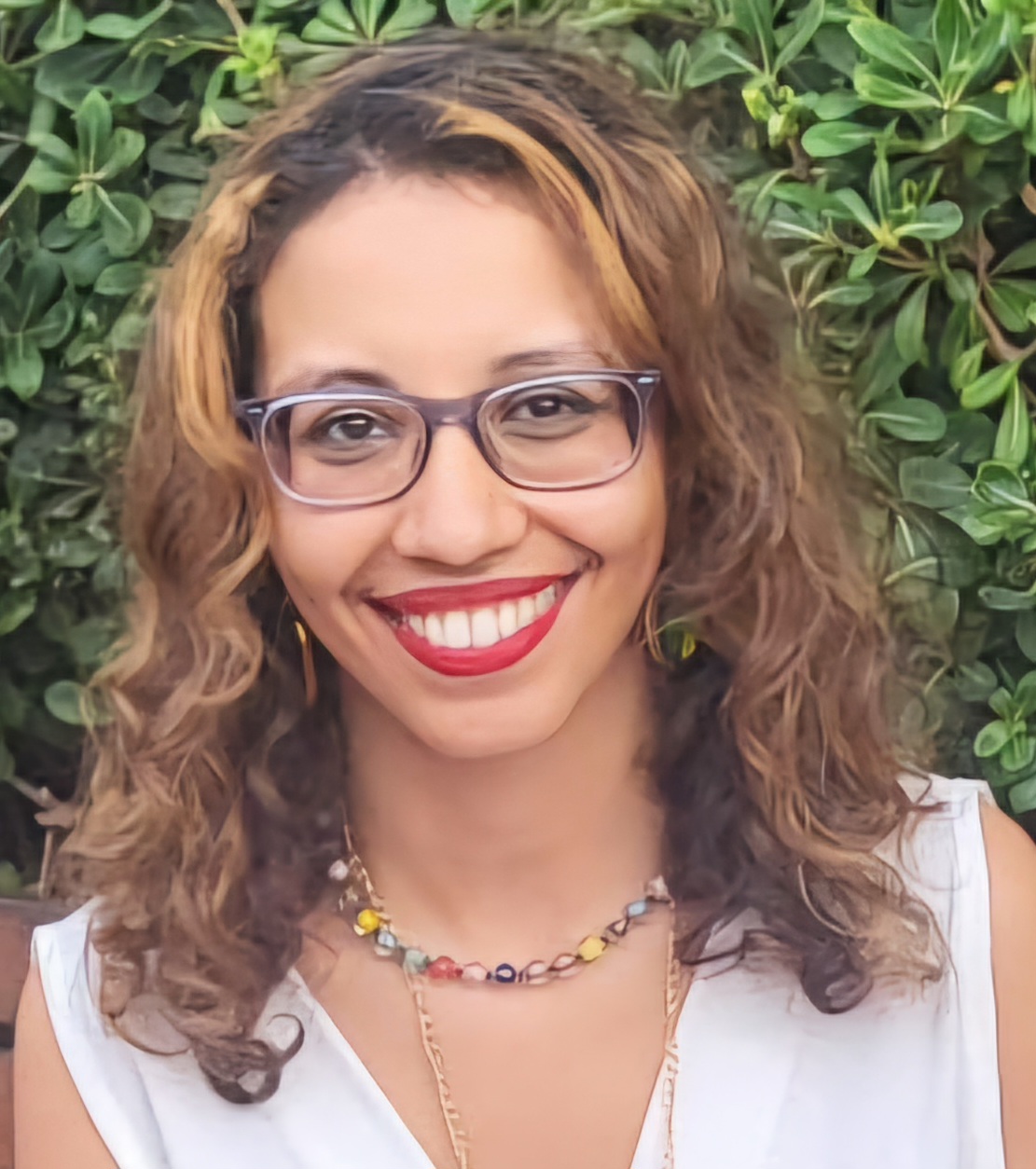
Dr. Ikrame SELKANI
Dr. Ikrame Selkani is an accomplished academic currently serving as an Assistant Professor at several prestigious business schools in Spain, including Cesine International Business School in Santander, and UIBS.
Originally from Morocco, Dr. Selkani holds two PhDs: one in Heritage from the University of Córdoba, Spain, and another in Sustainable Management from the University of Santiago de Compostela, Spain. She also holds a Master’s Degree in Entrepreneurship and a Bachelor’s Degree in Management from Mohammed V University in Rabat, Morocco.
Dr. Selkani has made significant contributions to the academic community, publishing over 30 research papers in English, French, and Spanish across various international journals. Her research spans a wide array of topics, including Management, Marketing, City Marketing, Culture, Heritage, Tourism, Sustainability, Environment, and Innovation.
She is also the author of the book : The Role of Marketing in the Success of Entrepreneurial Ventures (2015), originally written in French. A recognized expert in her field, Dr. Selkani has been a keynote speaker at numerous international conferences in countries such as Morocco, France, Spain, Australia, Denmark, Austria, Sweden, the UK, and the USA....
Management Marketing City Marketing Culture Heritage Tourism Sustainability Environment and Innovation....
Managerial innovation is the invention and implementation of new management practices, processes, structures, or techniques compared to what is known in order to achieve the objectives of the organization better. The purpose of this paper is to clarify via an example the link between the application of managerial innovation techniques and protected areas, that is to say, to identify an internal action plan that applies in protected areas. In other words, should the manager apply the old style of management more (give orders, orient, direct, get the last word, etc.) or attempt to bring to personnel into management, take into account their thoughts, and grow them as relevant human capital? After the qualitative research: guide interview with national park manager, we understood that managerial innovation is being created to aid in the spontaneity of innovation and to more organically connect human relationships. To promote sharing and quality time, as was the case investigated in Huascarán National Park, Peru, we need to learn more about the collaborative component and cooperative modality. The main questions of this paper are: within natural and protected areas such as parks, managerial innovation may well be applied; here, we will study the case of Huascarán National Park, Peru, and we will figure out how these areas are operated and the efficiency of managerial innovation.
La compétitivité d’un territoire repose sur la panoplie d’avantages spécifiques, construisant un avenir particulier aux différents acteurs du territoire permettant à celui-là de coexister, de coopérer et de multiplier les efforts pour un avenir meilleur. (Ba., et al, 2010). Le festival « Alegria » (Chefchauen, Maroc) a été créé en 2004, tout en s’orientant vers le mouvement de la sauvegarde et la valorisation du patrimoine de la ville. En tentant compte de la richesse culturelle, le festival en question est un évènement ouvert à la culture du monde, vu que Chefchaouen est une ville de diversité, des valeurs du bon voisinage et de l’interaction culturelle. The competitiveness of a territory is based on the panoply of specific advantages, building a specific future for the different actors of the territory allowing them to coexist, cooperate and multiply efforts for a better future. (Ba., et al, 2010). The "Alegria" festival (Chefchauen, Morocco) was created in 2004, while focusing on the movement to safeguard and enhance the city's heritage. Taking into account the cultural richness, the festival in question is an event open to world culture, given that Chefchaouen is a city of diversity, good neighborly values and cultural interaction.
Artes, leyes, moral, creencias, conocimientos, lenguas, literaturas, etc., es la columna vertebral de toda sociedad. A partir del uso de los proverbios podemos entender una sociedad en todos los aspectos que le dan particularidad y especificidad cultural. Los refranes son un tipo de literatura oral, también es un testimonio cultural y patrimonial que representa la memoria y la identidad de la población que lo utiliza. El lugar donde se usan estos proverbios y refranes suele tener una historia propia que luego permite descubrir una gran parte de los aspectos socioculturales. Los proverbios en sí, suelen ser morales, expresan una verdad, una experiencia o un consejo de sabiduría al que se refiere el hablante. Los proverbios forman parte de una comunidad que los dota con una riqueza simbólica en la que se basan sus valores e intereses. En Marruecos, podemos considerar, entre otros, el siguiente trío: lenguas, literaturas y culturas; un trío cuyos elementos están estrechamente vinculados e interconectados. De hecho, es a través de las lenguas y literaturas presentes en Marruecos como emergen las múltiples facetas y aspectos de la cultura marroquí, revelando la riqueza de sus incesantes ramificaciones. La novedad de este artículo se basa en notar la diferencia en los sentidos de los refranes, veremos la utilización de ellos a través de los colores en tres idiomas: árabe, francés e inglés. También veremos la escasez en nuestros tiempos.
Over the past two decades, tourism has undergone profound transformations in response to significant global shifts (Butler 1999). At its core, tourism embodies the concept of ‘sustainable development.’ Interest in this sector has surged, expanding its reach worldwide since the term was coined in the late 1990s. Ecotourism emphasizes the management and conservation of natural resources (Liu 2003). When tourism engages with natural assets or resources, they can be classified into three categories based on their prevalence: ubiquity, which is found everywhere; commonality, which is widespread in many regions; and rarity, which exists in relatively few locations (Healey and Ilbery 1990). To enrich the study, a semi-structured interview was sent via email to the National Park Manager to gather insights about the protected area and ecotourism in the surrounding area. The study will take place at the Three Bays Protected Area, a marine sanctuary located in Haiti.
Attractiveness via culture and the arts is essential, so that cities make their choice to make themselves known. “Culture has become an instrument of an increasingly explicit strategy of national and international influence” (Taliano-Des Garets 2007). These days, culture and tourism are two factors that generate distinct and varied goals and have a very strong positive association through the Fez festival, in this instance. Each region can design its own strategy while developing itself to become more attractive, which in the medium and long term will provide it a favorable and positive image to convey to both national and international audiences. In many towns across Europe and the rest of the world, festivals have grown in importance. A multitude of interconnected factors, including new methods of managing urban areas, the application of cultural policies meant to restructure wealth creation in a positive way, structural shifts in the nature of economic production, and the gradual normalization or symbolization of the traditional economic sector, could be the cause of this increase (Quinn 2005; Scott 2000). In this study, we will look at the case of a Moroccan city, called Fez, in order to examine the role of culture in the city’s development, in order to study the importance of the cultural aspect in promoting this city’s image at different levels: nationally and internationally. In this paper we will answer this main question: how does culture influence the growth of the city of Fez, throughout the World Sacred Music Festival?