

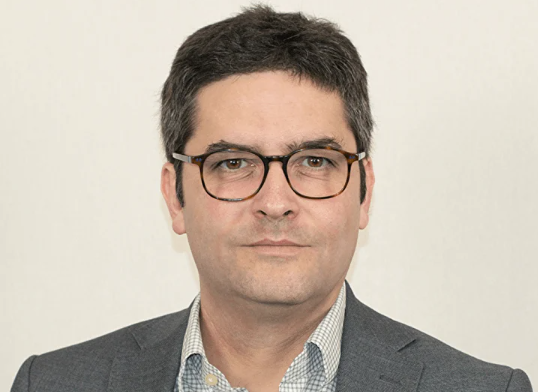
Giuseppe Catenazzo is a Research & Innovation Center member and a Visiting Lecturer at Glion Institute of Higher Education, Switzerland. Previously, he served as the Head of Research, Dean of Academics, and Lecturer at Swiss business schools, as well as an Assistant Professor in Marketing at a leading FT-listed business school in France. Giuseppe is currently doing a PostDoc in Portugal, and studied earlier in Switzerland (PhD in Management), France (Masters in Management and Business Research), the United Kingdom (PgCert in Applied Environmental Economics) and Italy (Bachelors in Economics and Management). He is also a Certified Member of the Market Research Society (CMRS) and a Fellow of the Chartered Institute of Marketing (FCIM) in the United Kingdom. An Italian and Swiss citizen, Dr Catenazzo is an editor of international research books. His research on quality perceptions, service recovery, and complaining behaviour has been published in Production Planning and Control, the International Journal of Quality and Reliability Management, and the Journal of Consumer Satisfaction, Dissatisfaction and Complaining Behavior.
consumer complaining behaviour service recovery product quality travel comfort train travel aviation
International audience
Purpose This study investigates two moderators of the effects of manufacturers' recovery efforts following a product defect on customers' perceptions of product quality: the severity of the product defect and whether the recovery efforts were covered under warranty or not. Design/methodology/approach A total of 478 USA customers who purchased a new car from a cooperating manufacturer participated in a survey. Customers reported the most important product defect (if any) the customers had experienced with the customers' vehicle during the past year. Three linear regressions (OLS) were used to test the proposed hypotheses. Findings Defect severity moderates the effects of recovery efforts on quality perceptions. The well-known recovery effect occurs only for product defects of minor severity. Experiencing a severe product defect damages the customers' perceptions of product quality even if the product defect is completely fixed. Double deviations (failed recovery of a product defect) do not damage quality perceptions for defects of minor severity. Finally, warranty coverage of repairs can attenuate the adverse effects of a failed recovery of severe defects on customers' quality perceptions. Additionally, only non-complainers who have experienced a severe product defect correspond to the prevailing conceptualization of an at-risk customer group. Originality/value Despite the pervasiveness of product defects, research on the effects of experiencing product defects on customers' product quality perceptions is scarce. Furthermore, the authors' findings reconcile inconsistent results and provide a more nuanced understanding of the well-known recovery and double-deviation effects. Finally, the role of warranty coverage in the recovery process as a buffer for customers' perceptions of product quality is novel.
Airline commissions ’ cuts and the use of Internet for bookings have severely affected traditional (physical) travel agen-cies. To survive, travel agents are redesigning their job as to become travel consultants. However, customers seem not to be willing to pay for the service provided and current fees are not representative of its perceived value. We have de-signed a theatre-based experiment to discover the Willingness-To-Pay for a travel agency service experience. Results show that individuals are not willing to pay anything for an unpleasant experience. By contrast, only 1/3 of the sample would pay enough for an outstanding service experience to make such a business sustainable.
Purpose The aim of this paper is to identify the impact of two Canton Geneva pedagogical tools devised to sensibilise the local population to sustainable development issues. Design/methodology/approach The survey attempts to verify individuals' awareness and opinion towards sustainable development, as well as the influence of both tools on their routines. In total, 992 people who live and work in Canton Geneva answered a questionnaire that was administered between January and February 2008. Findings People feel concerned by sustainable development issues and seem to be motivated to adapt their routines to comply with its needs. However, they feel not to be sufficiently informed: experiencing either or both pedagogical tools seems to positively influence individuals' behaviours. Originality/value The paper provides some measures about the impact of educational driven programmes on individuals' awareness and behaviours towards sustainable development.
Switzerland has introduced a new regulation that forces most SMEs to adopt an internal control system (ICS) by the end of 2008. The implementation of ICSs might not provide proper risk management approaches for the organisations. Indeed, logistical and psychological barriers might affect their proper deployments. Consequently, we have conducted two surveys: the first one addressed to the Geneva working population (417) and the second one to 225 Swiss (mostly) certified-accountants in charge of verifying the existence of ICSs.
In this paper, the authors present the results of an empirical study that attempts to analyse the risk of bank run in Geneva, Switzerland. Two similar surveys have been conducted upon two independent samples of Geneva population (June 2008 and February 2009) to detect the existence of predictive signals leading to a bank run within the selected area. The authors discover that Geneva inhabitants are generally confident in Swiss banks; the risk of a bank run in the area is low. However, reliance to the national banking system is worsening: The number of people fearing about their savings and those thinking the default of a major Swiss bank as ”possible” has significantly risen. Also, more and more people keep updated about the current financial crisis; overall trust in Swiss banks has slightly decreased.
In this study, we examine the perceptions of individual shareholders during Swiss annual general meetings (AGMs). Using AGMs as a corporate governance device has become ineffective; a panel of experts has called on small shareholders to increase their involvement in order to improve meeting efficacy. We designed a theatre-based experiment with 149 participants who acted as shareholders of a fictitious Swiss-listed SME. We find that active small shareholders are perceived positively by less than half the subjects. Pension fund representatives seem to instil the highest level of confidence in shareholders in their ability to maintain long-term company sustainability. Finally, we note that confidence in the board of directors fell markedly over the course of the experiment.
ABSTRACT Despite manufacturers’ efforts to implement stringent quality control and monitoring of their production processes, products can still fail. In contrast to the abundant literature on service failures, research on product defects is surprisingly scarce. When there are product failures customers may choose to complain and eventually have their product defect fully fixed. Alternatively, they can decide not to complain, forgoing the opportunity to have their product repaired. In this paper, we examine the impact of not complaining versus complaining, as well as the effect of the outcome of the complaint resolution process (i.e., whether defects are fully fixed or not) on the relationship between the original product manufacturer and the service operation (retailer) responsible for fixing product defects. We demonstrate that for non-complaining customers, the perceptions of product quality and loyalty to the product manufacturer still deteriorate. Further, we confirm support for the well-documented service recovery effect but fail to find the effect for product manufacturers. Even if product defects are completely fixed, customers’ perceptions of product quality and loyalty to the product manufacturer are damaged.
International audience
In this paper, we present the results of a survey we conducted to unveil the perceptions on accounting services of managing directors of very small enterprises (VSEs) in Canton Geneva, Switzerland. 153 out of a random sample of 1,018 company directors answered our mail survey in May to June 2009. Among our results, we observe that most VSE directors outsource accounting tasks and are satisfied with the services they receive. They seem to fully acknowledge the value provided by accountants. Trust, information and advice provided by accountants are positively related with their clients’ satisfaction. Finally, we observe a relationship between customers’ willingness to pay for this type of credence service and their satisfaction with the services they receive.
This study replicates and extends in France an exploratory study run in Italy on travellers’ choice for a high-speed train service for leisure. We specifically analysed the effect of the country of origin of two train operating companies, i.e. a domestic versus a foreign carrier, and ticket price on travellers’ interest in a single high-speed train service. The results from an experimental study highlight that travellers seem not to consider either rail operator in their ticket preferences. On the other hand, ticket prices make a difference in assessing a ticket offer, but only up to a specific threshold. Above that limit, the ticket price becomes irrelevant in travellers’ eyes.
This PhD thesis examines the effects of product defects on customers' relationship with the product manufacturer and retailer. Three essays form the dissertation, which reports the analyses to the answers to a survey of 1,348 US customers who purchased a brand new car recently. First, building on Voorhees, Brady, & Horowitz' (2006), I looked at the customers' (non-)complaining for product defects and the subsequent repairs on their relationship with the retailer and the manufacturer. Second, I examined the effects of the severity of the experienced product defect and the eventual warranty coverage of repairs on the customers' perceptions of product quality. Third, I appraised the effects of the frequency of product defects and experiencing each defect type assigned to their product quality category (Brucks, Zeithaml, & Naylor, 2000) on the customers' perceptions of product quality and loyalty to the product manufacturer.
Services make most of the value in developed economies. In knowledge-based (credence) services, during each transaction, clients look for transmission of value through advice, information, knowledge, or counselling. Providers and clients interact during the service profusion; the human nature of these transactions makes errors inevitable. This chapter intends to guide managers step-by-step in providing better services and managing risks effectively. Each phase includes the presentation of a hands-on managerial tool. To design or improve a service, blueprint can help to visualize and fine-tuning its value chain. Riskoprint allows capturing the complexity of service risks, their sources, and severity. Finally, feed-forward controls contribute to preventing and recovering from service failures.
Travel and Tourism Cases in Southeast Europe to be published by Nova Science Publishers--Deadline: 30th January 2026 --DM for submission & …
Global Case Studies in Sustainable Management to be published by Cambridge Scholars Publishing--Deadline: 30th January 2026 --DM for submis…
Deadline: 30th January 2026 --DM for submission & further information -- https://ethicspress.com/products/cases-on-handling-risks-and-serv…
Global Case Studies in Sustainable Management to be published by Cambridge Scholars Publishing--Deadline: 30th January 2026 --DM for submis…