

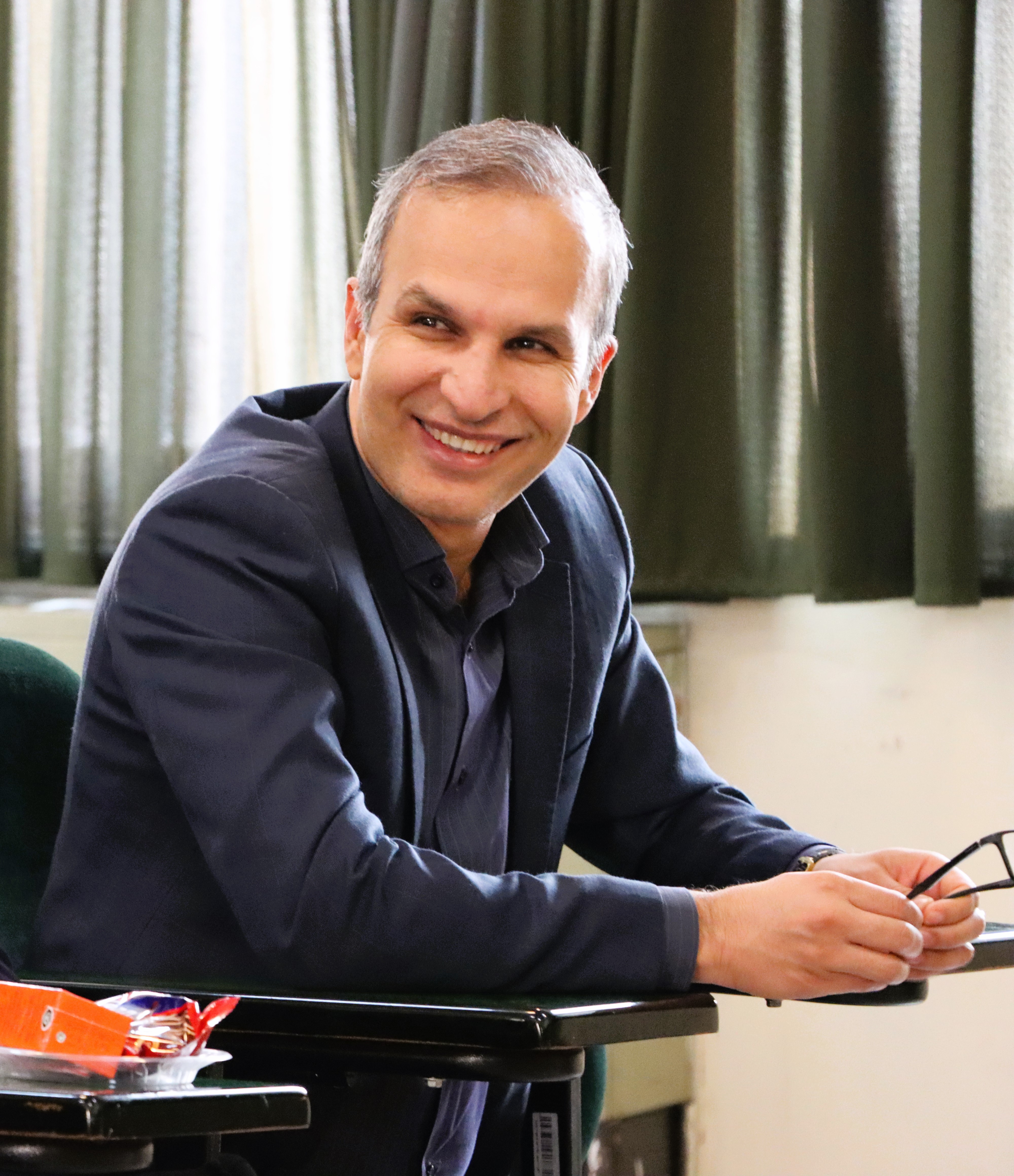
I am an Associate Professor of Communication at the University of Tehran. Born in 1979 in Rostam County, Iran, I grew up across Tehran, Shiraz, and Nourabad Mamasani before entering the fields of media studies, intercultural communication, and media philosophy.
Communication Cultural Studies Iranian Studies Intercultural Communication Media Studies
This study investigates the psychometric properties of a well-set form of the Rational-Experiential Inventory (REI) for adolescents (REI-A20). Participants were 746 Iranian high school students (412 males, 334 females), selected through multistage sampling method. After subjecting our data to principal components analysis (PCA) and parallel analysis (PA), we found a two-factor structure corresponding to rational and experiential processing. Both rational and experiential scales of the REI-A20 exhibited good internal consistency. These two factors accounted for 37% of the variance. The fit indices of confirmatory factor analysis (CFA) confirmed the cross-validity of the inventory. Rationality, but not experientiality, was significantly related to better school performance, elaboration, organization, and metacognitive strategies. Males scored significantly higher on rational scale, but there was no difference between females and males in scores on experiential scale. This new inventory has reliable scores, and allows for valid inferences in assessing individual differences in adolescents’ preference for the rational and experiential information-processing styles.
Academic plagiarism exists in all academic spheres, but contextual factors determine the level, intensity, and forms of it. Over the last few years, the phenomenon of “Ghost Authorship” has become widespread in Iran, and concerns have been expressed regarding this issue, not only by academicians but also by officials. In this study, 143 students participated in a two-step interview study in which they spoke about their experiences on either seeing a ghost author doing the research of someone else in exchange of money or they themselves being a ghost author. In all, 29 students said that they had done it once or so. The in-depth interviews with these 29 students showed how the plagiarism industry works in Iran, who the customers are, how they find each other, and so on.
This study investigates the mediating role of life management strategies to see how information processing styles indirectly influence subjective well-being. Participants were 440 university students (female = 202, male = 238) ranging in age from 18 to 50 years from all levels and all majors from universities in Quchan, Iran. In a nonexperimental design and by using path analysis, we found that selection, optimization, and compensation fully mediated the relationship between information processing styles and subjective well-being. Our proposed model fitted well to the data and could account for a significant proportion of variance in satisfaction with life, positive affects, and negative affects’ scores (42%, 51%, and 35%, respectively). These results provide empirical evidence that rational information processing style is a defining factor for planning, and its impact on subjective indicators of well-being operates indirectly and through life management strategies. This model, with a more active approach, has implications for both theory and practice in psychotherapy.
In recent times, Iran has seen an increase in various forms of academic dishonesty. The frequency of academic fraud, plagiarism, and cheating has led to efforts to rebuild the global reputation of Iranian academic institutions. We argue that academic dishonesty adversely affects not only the academic sphere but society as a whole, and addressing it requires an understanding of its various contributing factors. To this end, we undertook a study involving students from three different faculties at the University of Tehran. The study included 300 undergraduate students (182 females and 118 males), aged between 17 and 34 years (average age 20.55, standard deviation 2.04), from the Faculty of Psychology and Educational Sciences, Faculty of Management, and Faculty of Social Sciences. While only minor differences were observed among students from these three faculties, significant variations were noted in the perceptions of academic dishonesty among students from different academic years, including their views on professors' and peers' dishonest behaviors, and the justifiability of academic dishonesty.
This study investigates the relationship between social media usage and demographic as well as political attitudes using the Pew Research Center's Global Attitudes Spring 2023 Survey. The findings reveal that women are slightly more likely to use social media than men globally (52% vs. 48%). Country-specific analysis highlights gender variations, with higher male engagement in India (61.8%) and predominant female usage in Indonesia (58.2%) and Brazil (63%). Age significantly influences social media use, as users are generally younger (M = 35.79) compared to non-users (M = 45.47). Additionally, social media users express slightly higher satisfaction with democracy, although the effect size remains small. The analysis also reveals social media's association with smaller household sizes and lower prayer frequency, suggesting changes in traditional lifestyles. Notably, social media users report a stronger sense of global connectedness compared to non-users, particularly in countries like Kenya and South Africa.
Celebrities have gained considerable influence in the last one hundred years or so, but the advent of so-called Web 2.0 technologies has given celebrity culture a new momentum. We are living in a world in which celebrities are striving to curve their place in every niche and hence we have to become more media literate in order to avoid being exploited by celebrity media and culture. We have to be aware that celebrities promote commodities that they will never use, that they are carefully working on their image to become pleasant to us, and that if they do humanitarian work, they are mainly doing it for their reputation, and not for a real and authentic cause.
Whenever we turn our TV news channel on, we are likely to hear about an Iran-U.S. conflict. Images of the leaders of these two countries intimidating each other can be seen in news channels all over the world. When we are talking about Iran-U.S. international relations, most people think of the political relations which this study takes as intergovernmental rather than international relations. In this study, as we are Iranian and U.S. scholars, we tried a systematic review of studies focusing on perceptions the Iranian and American people have of each other. Our systematic review of studies reveals that, Americans have more negative perceptions of Iranians than the Iranians have of their American counterparts. Moreover, we discussed sources for these perceptions as well.
From the beginning, feminism was bent to shatter stereotypes and create a new vision of womanhood in the mainly male-dominated society. One important endeavor of feminism has been to oppose the objectification of the female body. In the male-dominated culture, femininity is mostly associated with young -and sexy-body of the female object. Surprisingly, in the past decade or so, we have witnessed a new wave of feminism which contradictorily tries to appeal to the old notion of the objectified young sexy female body in order to fight the very phenomena of oppression and objectification of the female body. In this study, I will have a review of four Iranian feminist pages on Instagram to show that femininity in these pages is mainly limited to young, beautiful, and sexy women. It seems older women (20% of female population) and even young women in bad living conditions who consist a majority of women in the society are systematically omitted from these pages just because this networked feminism perceives them not appealing to male audiences.
Intercultural, social media's impact has been twofold. Social media have provided unprecedented opportunities for members of different cultures to get to know each other directly and hence they have helped people to demystify their intercultural beliefs. At the same time social media have made poisonous hate speech and xenophobic comments communicated to other cultures which is followed by backfire from hated people. This causes a chain of increasing hate speech which eventually finds its way into practice. The changes in the media landscape as they are related to intercultural communication are what Shutter (2014: p. 478) calls a new field of inquiry, labelled as "intercultural new media studies," which consists of two fields: (1) new media and intercultural communication theory and (2) culture and new media. The study of social communities is extremely multidisciplinary, requiring expertise from communication, computer science, sociology, behavioral sciences, mathematics, and statistics Those who have a relevant position in a social media platform organization have access to the most personal information one can conceive. They know what an individual looks like, how he or she lives, whom he or she loves or hates, where he or she goes, what he or she thinks. Doing research on social media gives us better accuracy, particularly in the case of sensitive issues of intercultural communication in the Middle East. In this article, we evaluate different aspects of social media in the Middle East, though with a critical view, the concept of "Middle East" is itself problematic. Middle East is middle east to another construct which is the West. Fruitful study of social media in the Middle East necessarily includes considerations there of ethnicity and race, religion, identity and language, the economy, and history and wars in the region and elsewhere.
The mid-ninetieth century witnessed a dramatic rise in celebrity culture.Celebrities from all walks of life popped up everywhere in the industrialized world and -through media-flew to underdeveloped nations.As celebrity itself is a construct, smart publicists started to look for new ways of enhancing celebrities' reputation.Among many ways, humanitarian work proved to have had a decisively positive effect on celebrities' place in the public eyes.Henceforth, we have witnessed celebrities intervene in different spheres of professional work like relief, medicine, education, gender equality, public policy, etc., in which they have no expertise.This paper argues that celebrities' engagements in different spheres of action is designed to serve celebrities themselves, and not those who are in need.As a result, we can increasingly see that some celebrities publish adds appealing followers to donate in exchange for nude photos of him/herself.Since celebrities work to serve themselves, they resort to images and image making, instead of dealing with the problem of poverty itself; this culminates in a situation in which we the audience concentrate on the celebrity, and not the problem he or she claims is trying to solve.I, therefore, call this pornography of poverty.
In popular culture and academic discourse, there have been hot debates over the role of violent online and video games in inciting violence in players. Moreover, we have been reading about `dirty world syndrome' in which violent media content cultivate a vision in hardcore media consumers in which the world is seen as a place of dirty people and deeds. Based on data from Pew Research Center's American Trends Panel Wave 26 which has been carried out in April 2017 on 4168 respondents, we came to the conclusion that there is no serious relationship between playing online violent video games and seeing the world as an unsafe place. Here, our squared is too small which means that neither playing computer games, nor playing violent games on the computer have an effect on perception of safety in the society.
Purpose For about four decades, Iran and the USA have continued to be two most stubborn enemies and this has drawn much research on this subject. Yet, only a very small fraction of this body of research has been allocated to studying the perceptions that the people of the two countries have of each other. Using a mixed method survey, the purpose of this paper is to explore cross-cultural schemata US American people have of Iranians. Design/methodology/approach By way of an e-mail survey, the authors collected 1,752 responses from American citizens across 50 American states. The open ended responses were codified and categorized. Three out of six categories were further sub-categorized. Findings The outcomes showed that about 40 percent of Americans had negative cross-cultural schemata of Iranians with the media being the main source of negative cross-cultural schemata. Conversely, personal contact and communication with Iranians proved to be the source of positive cross-cultural schemata toward Iranians. Other results showed that US American exceptionalism and negative attitudes toward Iranians had a direct and positive relationship with having negative cross-cultural schemata of Iranians. Originality/value As the authors have explained in this paper, very few scholars have taken up the issue of cross-cultural schemata Iranian and American people have of each other. By doing this and several other works, the authors have tried to create a new research interest in academic circles.
This paper studies the meanings and connotations using cosmetics among Iranian young women. A salient phenomenon in contemporary Iran is the overuse of cosmetics by women. This has culminated in raising concerns by religious figures, social critics, government authorities, and physicians. These are all happening in post-revolutionary Iran in which according to Islamic rules, women are expected not to expose their body and ornaments. Therefore, the paradox of living under Islamic laws and the will to be modern is concerned / addressed / discussed here. How, then, Iranian young women interpret their make-up, whether as ostentation, as resistance against dominant ideology, as distinction from others or as the result of new global media influence is explained in the research. DOI: 10.5901/mjss.2015.v6n4s3p182
The primary objective of this research is to investigate the intermediary function of long-term self-regulation and perceptions of instrumentality in the correlation between Future Time Perspective (FTP) and academic achievement. Additionally, the study aims to explore the moderating impact of Socio-Economic Status (SES). The sample comprised 572 third-year high school students majoring in Science, selected through a meticulous stratified sampling process. Participants completed a comprehensive questionnaire encompassing the Future Time Perspective Scale (FTPS), Adolescent Self-Regulatory Inventory (ASRI), and Perceptions of Instrumentality (PI) Scale. SES was assessed in relation to parental education and household income indices, while academic achievement was gauged based on mean scores in three core courses: physics, chemistry, and biology. The study's conceptual model, as assessed through structural equation modeling, demonstrated a good fit for both high and low SES in the student cohorts. However, an analysis of the Chi-square for model fit revealed significant differences between the two groups, indicating non-identical structural relationships. Notably, in both groups, value and speed exhibited impacts on academic achievement, while the influence of connectedness varied between the groups. The research findings revealed that academic achievement in both groups was influenced by value through PI and by speed through long-term self-regulation. Connectedness affected academic achievement in both groups, but its impact was indirect through long-term self-regulation. Furthermore, in the high SES group, connectedness had a direct effect on academic achievement and also an indirect effect through PI. Interestingly, these direct and indirect effects were not statistically significant in the low SES group.
In September 2022, when the Woman, Life, Freedom protests erupted in Iran, many international commentators anticipated significant changes in the country. However, one and a half years later, there has been little meaningful transformation in Iranian society and politics. This paper argues that the activities of certain prominent Iranian opposition figures, notably Masih Alinejad, contributed to Iranians choosing to abstain from the protests. Through an extensive analysis of data from Google Trends, Wikipedia, and X, we demonstrate widespread cynicism among Iranians towards Masih Alinejad and her initiatives. Consequently, this study views her role as pivotal in safeguarding the Islamic Republic regime by presenting a bleak outlook for Iranians if the protests were to continue and succeed.
Abstract Cultural schema theory holds that human beings employ classification to understand members of other cultures, and add new data to previously available categories. Cultural schema theory is compatible with many well‐known theories and could be applied individually or in combination with other theories. This theory is widely used not only in human and social sciences, but also in interdisciplinary fields like artificial intelligence.
Given the immense shifts the social networking sites and applications have brought about, a considerable number of researchers in the field of communication studies have turned to study different aspects of social media usage and factors influencing it. This study gathered data from 33318 US non-institutionalized citizens over 18 including 17079 females and 16239 males; they were members of web panelists of Pew, and their answers revealed that a majority of this online participants used a kind of social media. The results of this study revealed women use social media more than men, and religious people more than non-religious people. In addition, the results indicated that married people are the least users of social media in comparison with other marital groups. Our results showed that all demographics are significantly related to social media usage. But this significance can be somehow misleading because of weak practical effect sizes. Except for marital status and age Cramer’s V values are too small and their significance may have nothing to say but sensitivity to the degree of freedom.
This study explores the dimensions of “liquid love” among Iranian Internet users. Over the last decade, the phenomenal growth of the Internet has caused fundamental changes in the Iranian lifestyle. One aspect of the Iranian lifestyle is the strict cultural codes on how males and females can interact. Now, on the Internet, most of this cultural barriers have been removed. It is very important to study how heterosexual relationships are rampant in the Iranian cyberspace, and what are the causes and consequences. Therefore, this study conducts a quantitative study on more than 500 Iranian young Internet users and then analyses 3000 Iranian blog posts which Iranians have written on heterosexual relationships online which Zygmunt Bauman calls it “liquid love.” Finally, a comparison of both phases revealed that this kind of relationships are rampant in Iran, and this phenomenon has generally left unpleasant feelings and consequences on the Iranian young Internet users, as discussed in their answers to our questionnaire and their posts on their weblogs. DOI: 10.5901/mjss.2015.v6n1s1p138
Over the last decade, the retail industry has had a phenomenal growth. All figures show their success and efficiency and many studies have shown the role of customer reviews in encouraging ambivalent purchasers to buy items online. There have been numerous studies on why people read and trust these comments and taking for granted the important role of customer reviews in determining buying decision, this study endeavors to identify and explain the different factors involved in making a comment "useful". We took an Iranian retail website and collected comments on perceived "usefulness" of each review. Our results showed that perceived level of usefulness was related to the word count of the comments, personal experience of the writer with the product, emotional description of the product, and mentioning the strength/weakness points of the product.
Before Iran-Russia wars of early 19th century, Iranians had no clear understanding of the concept of “power” and its elements. By then, Iranians, albeit in a limited sense, for the first time became familiar with the issue of modernity. This familiarity was due to wars with Russia which was at that time an emerging colonial power. As a result of this war, some very limited number of Iranian elites collected that the concept of “power” was changing and old conceptualizations which took the emperor as the basis of power were no longer in place. Defeats in war against Russia problematized the concept of power, and studying the rise and fall of powers became an issue worthy of consideration. Moreover, replacements in borderlines entailed a kind of “border consciousness” among Iranian elites and guided them to understand the modern concept of sovereignty for the first time. The issue of sovereignty paved the way for posing the issue of law which was not something important in the empire model of governance in Iran
<p>Recent years have witnessed a growth in academic dishonesty of different kinds in Iran. The cases of fraud, plagiarism, cheating etc. have been so frequent that some people in Iran have tried to restore international credibility to the Iranian academia. We believe academic dishonesty will have negative impact not only on the academia, but also on the society, and one way to tackle it is to study different factors related to it. Therefore, we conducted a study on students in three faculties at University of Tehran. Participants were 300 BA university students (female = 182, male = 118) ranging in age from 17 to 34 years (M= 20.55 and SD= 2.04) from three faculties at University of Tehran: Faculty of Psychology and Educational Sciences, Faculty of Management and Faculty of Social Sciences. Although we found small differences among students in three faculties, we found great differences among students from different years of study as regard to their perceptions of professors' academic dishonesty, their classmates' academic dishonesty, and righteousness of being academically dishonest. </p>Each participant in this study was briefed about the nature of research and was assured about his/her anonymity. Only after getting participant's informed consent, we delivered the questionnaire.
There has been much debate on how Web 2 technologies and social media have contributed in empowering the disempowered. Over the last decade, Kurdish people have widely used social media as means against external and internal threats. As such, many have begun speculating that social media have provided a platform for doing the unthinkable, namely, creating a harmonious, integrated and independent Kurdistan. Yet, there are alternative perspectives which although acknowledge the emancipatory benefits of social media and Web 2 technologies, are cautious that popularization of debates may marginalize the authentic and more sophisticated leaders of thoughts. After giving insights on how Facebook has been received among Kurds, this paper will study different trajectories of online debate in the case of Nasser Razazi's recent assertions. In these assertions, Razazi who is an iconic Kurdish singer and former member of a Kurdish rebel group in Iran, had criticized Kurdish parties and said he no longer favored independence from Iran. As a result, thousands of Facebook users of Kurdish background participated in online debates on his position. Here, I conducted a mixed method study on a sample of 217 comments by users on some pages and posts regarding Razazi's recent assertions and showed how Facebook debates in Kurdistan might contribute to a "dumbing down" process, or, help Kurdish people to build a working civil society.
Since Iran is governed by a theocratic administration, social "authority" in this society has always been a political issue. Over the past decades, Iranian traditional family which is the building block of the Iranian society -and the political establishment-has been on the decline and it is not surprising that new sources of authority have emerged. The introduction of social networks and web 2.0 technologies has increased the pace of this trend and now celebrities and minicelebrities on social media increasingly command Iranian millennials' attention. This study utilizes the data from a countrywide survey (n=14906) on many aspects of Iranian social life and values, to find out what factors contribute to celebrity culture in Iran. The results show that religiosity and feeling of happiness are negatively associated with celebriphilia; also, this research found other factors can predict a person's inclinations towards celebriphilia.
<p>Recent years have witnessed a growth in academic dishonesty of different kinds in Iran. The cases of fraud, plagiarism, cheating etc. have been so frequent that some people in Iran have tried to restore international credibility to the Iranian academia. We believe academic dishonesty will have negative impact not only on the academia, but also on the society, and one way to tackle it is to study different factors related to it. Therefore, we conducted a study on students in three faculties at University of Tehran. Participants were 300 BA university students (female = 182, male = 118) ranging in age from 17 to 34 years (M= 20.55 and SD= 2.04) from three faculties at University of Tehran: Faculty of Psychology and Educational Sciences, Faculty of Management and Faculty of Social Sciences. Although we found small differences among students in three faculties, we found great differences among students from different years of study as regard to their perceptions of professors' academic dishonesty, their classmates' academic dishonesty, and righteousness of being academically dishonest. </p>Each participant in this study was briefed about the nature of research and was assured about his/her anonymity. Only after getting participant's informed consent, we delivered the questionnaire.
The meteoric ascent of the Korean music ensemble BTS has captured the attention of audiences worldwide with their distinctive fusion of pop, hip-hop, and R&B. Their ability to weave religious elements into their music has propelled their success far beyond mere musical band, breaking through cultural and linguistic confines. Their impact reshapes the music industry and presents an intriguing case of cultural exchange within the global entertainment scene. This data-mining study explores BTS’s remarkable ability to cultivate a vast fanbase in Iran. However, the findings indicate a waning influence in the region, as evidenced by a decrease in tweets about BTS from 39,237 to 23,697, and finally to 9,215 over three consecutive years leading up to 2024. Despite this decline, the core group of BTS enthusiasts in Iran, predominantly loyal teenage girls, continues to actively support the group.
In recent times, Iran has seen an increase in various forms of academic dishonesty. The frequency of academic fraud, plagiarism, and cheating has led to efforts to rebuild the global reputation of Iranian academic institutions. We argue that academic dishonesty adversely affects not only the academic sphere but society as a whole, and addressing it requires an understanding of its various contributing factors. To this end, we undertook a study involving students from three different faculties at the University of Tehran. The study included 300 undergraduate students (182 females and 118 males), aged between 17 and 34 years (average age 20.55, standard deviation 2.04), from the Faculty of Psychology and Educational Sciences, Faculty of Management, and Faculty of Social Sciences. While only minor differences were observed among students from these three faculties, significant variations were noted in the perceptions of academic dishonesty among students from different academic years, including their views on professors' and peers' dishonest behaviors, and the justifiability of academic dishonesty.
This study investigates the polarized discourse surrounding “woke” and “wokeism” among Persian-speaking users on Platform X, analyzing 10,300 unique posts collected from January 2024 to January 2025. Employing a mixed-methods approach, the research integrates sentiment analysis, keyword cloud generation, and K-Means clustering to uncover thematic patterns, emotional tones, and ideological underpinnings. Findings reveal a deeply divided discourse, dominated by sarcastic “Delighted” and “Furious” sentiments, with six thematic clusters highlighting critiques of wokeism as a destructive force, a liberal agenda, or a globalist conspiracy, often framed within Iran’s socio-political context. Users critical of wokeism use the terms to denounce perceived cultural decline, while supporters avoid them, favoring phrases like “modern culture.” Another notable finding of this study is the prevalent use of sarcasm in “Delighted” posts, which masks strong opposition to wokeism, revealing a complex emotional strategy in Persian-language discourse on X. The study emphasizes the relations between global and local narratives and demonstrates how Persian-speaking users reinterpret wokeism through lenses of cultural nationalism and resistance to Western influence.
Background: Self-development microcelebrities constitute a distinct and rapidly expanding subtype within the broader culture of fame. These figures primarily operate within the digital self-help domain, offering audiences simplified psychological and lifestyle concepts that promise personal transformation through adherence to their guidance. Contemporary self-help discourse is rooted in the positive psychology movement that gained traction in the United States during the late 20th century and is heavily influenced by neoliberal ideologies that emphasize individual agency and responsibility. Aims: In this research, Instagram pages of Iranian self-development microcelebrities were studied to understand what they share with their audience and the various methods they employ to engage with them. Methodology: This study analyzes the Instagram accounts of Iranian self-development microcelebrities with follower counts exceeding 300,000, using a thematic analysis approach. Initially, each account was analyzed individually, followed by a cross-case analysis to identify recurring thematic patterns. Findings: The analysis revealed three overarching themes—pseudoscience, the primacy of luck and the inner self, and self-made rules—comprising seven organizing themes and 31 basic themes. The findings indicate that these microcelebrities promote a form of hyper-individualism aligned with neoliberal values. Conclusion: This model of subjectivity emphasizes psychological self-regulation and inner transformation while detaching individuals from social and political engagement.
The primary objective of this research is to examine the mediating roles of long-term self-regulation and perceptions of instrumentality in the relationship between Future Time Perspective (FTP) and academic achievement. The study also investigates the moderating effect of Socio-Economic Status (SES). The sample consisted of 572 third-year high school science majors selected through stratified sampling. Participants completed a comprehensive questionnaire that included the Future Time Perspective Scale (FTPS), the Adolescent Self-Regulatory Inventory (ASRI), and the Perceptions of Instrumentality (PI) Scale. SES was assessed using parental education and household income indices, and academic achievement was measured using mean scores in three core courses: physics, chemistry, and biology. The conceptual model, evaluated through structural equation modeling, demonstrated a good fit for both high- and low-SES groups. However, a Chi-square test of model fit indicated significant differences between the two groups, suggesting that their structural relationships were not identical. In both groups, value and speed were associated with academic achievement, while the effect of connectedness differed across groups. The findings showed that academic achievement in both groups was influenced by value through PI and by speed through long-term self-regulation. Connectedness also affected academic achievement in both groups, but only indirectly through long-term self-regulation. In the high-SES group, connectedness additionally had a direct effect on academic achievement and an indirect effect through PI. Notably, these direct and indirect effects were not statistically significant in the low-SES group.
I am interested in collaborating with colleagues from other countries. My field is Communication and Media Studies. If you have a good proj…
I am interested in collaborating with colleagues from other countries. My field is Communication and Media Studies. If you have a good proj…